
Describing Words 형용사
Big, small, hot, cold — adjectives with pictures.
Ad
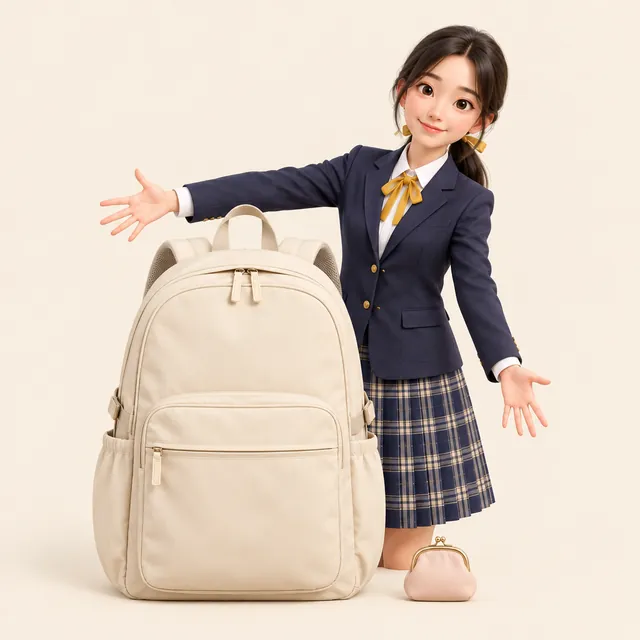 1 / 26
 Describing words let you say what things are like: big or small, hot or cold, easy or difficult. In Korean they are called adjectives, but they behave like verbs: they end in -다 in the dictionary and change their ending when you speak, for example 크다 becomes 커요 in polite speech. This set covers the 26 most useful adjectives for everyday talk, shopping, food and weather, many of them in opposite pairs so they are easy to remember together. You will use them when you describe a room, ask about a price, compliment a friend, or complain about the weather. Cultural note: Koreans often answer a question with just the adjective, like 좋아요 or 맛있어요, without saying I or it, because the subject is clear from context.

Learn adjectives in opposite pairs, like 크다 and 작다, and say both out loud while you point at two real things near you.
Word list
Tap a card to start the player from that word.
- 크다keuda big / large
- 작다jakda small / little
- 길다gilda long
- 짧다jjalda short
- 높다nopda high / tall (for places)
- 낮다natda low
- 무겁다mugeopda heavy
- 가볍다gabyeopda light (not heavy)
- 빠르다ppareuda fast / quick
- 느리다neurida slow
- 뜨겁다tteugeopda hot (to the touch)
- 차갑다chagapda cold (to the touch)
Ad
- 쉽다swipda easy
- 어렵다eoryeopda difficult / hard
- 비싸다bissada expensive
- 싸다ssada cheap / inexpensive
- 깨끗하다kkaekkeutada clean
- 더럽다deoreopda dirty
- 좋다jota good / nice
- 나쁘다nappeuda bad
- 예쁘다yeppeuda pretty / beautiful
- 조용하다joyonghada quiet
- 시끄럽다sikkeureopda noisy / loud
- 많다manta many / much / a lot
- 밝다bakda bright
- 어둡다eodupda dark
Ready-to-use sentence
- 이거 커요?Is this big?
- 너무 비싸요.It is too expensive.
- 조금 더 싼 거 있어요?Do you have a cheaper one?
- 정말 예뻐요!It is really pretty!
- 어려워요, 천천히 해 주세요.It is difficult, please go slowly.
- 괜찮아요, 좋아요.It is fine, it is good.
Frequently asked questions
Why do Korean adjectives look like verbs?
In Korean, adjectives are conjugated like verbs. 크다 becomes 커요 (present polite) and 컸어요 (past), and they connect to nouns with a changed ending, like 큰 집 (a big house).
What is the difference between 덥다 and 뜨겁다?
덥다 describes hot weather or a hot room, while 뜨겁다 describes something hot to the touch, like soup or a pan.
Do I need to say I or it in the sentence?
No. Koreans usually leave out the subject when it is clear, so 비싸요 alone can mean It is expensive.
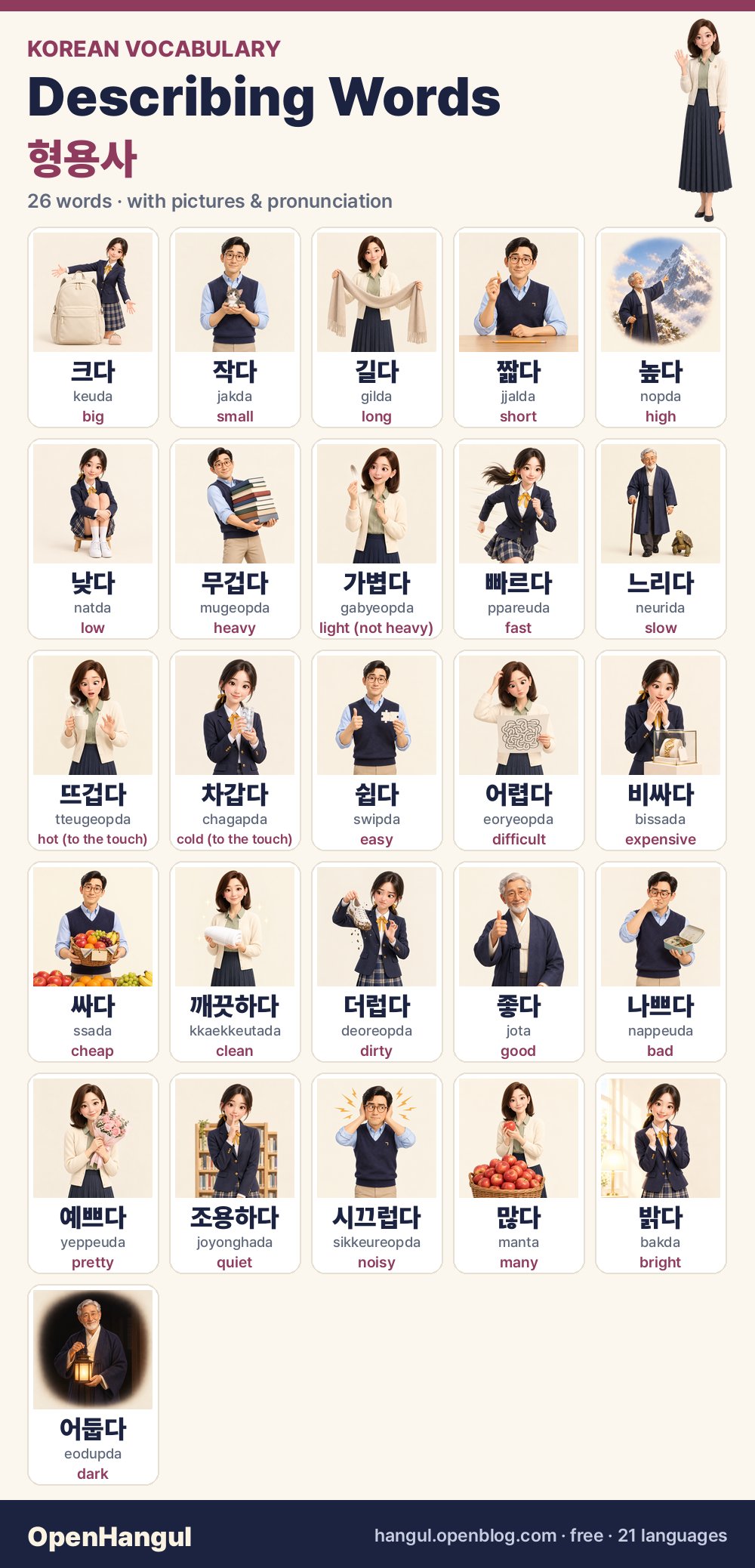
Word chart on one page
Save it and review whenever you have a spare moment. Feel free to share it with friends.
Save word chart imageAd