
Signs & Notices 표지판
Entrance, exit, no smoking, push, pull — signs you need to read.

Ad
 1 / 20
 This set covers the signs and notices you will meet every day in Korea: entrance and exit, no smoking, pull and push, open and closed, and warnings like danger and caution. Reading these quickly helps you stay safe and find your way in stations, shops, restaurants and public buildings. Most sign words are short Sino-Korean words, and many end in -구 (opening, as in 입구 and 출구) or -금지 (forbidden). A cultural note: shop doors usually show 당기세요 or 미세요 and shops often hang a small board that says open or preparing. Look at the picture, learn the word, and then try to spot it on a real door or wall.

Play a game on the street: every time you see a sign, read it in your head before you check the picture.
Word list
Tap a card to start the player from that word.
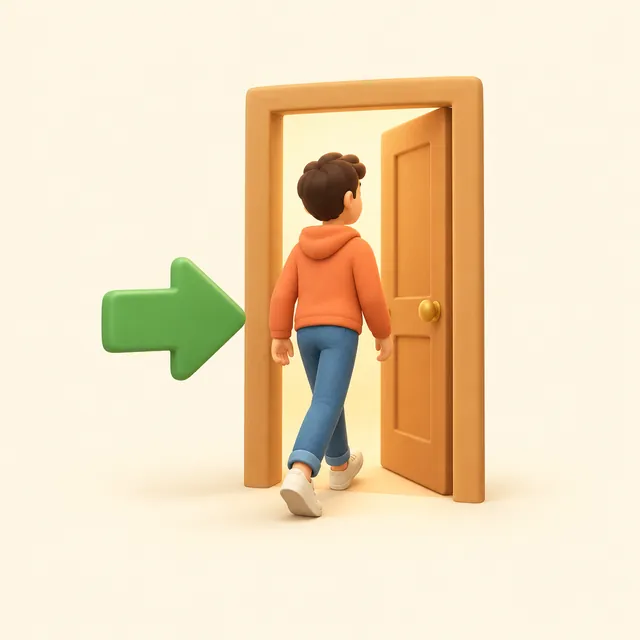
- 입구ipgu entrance
- 출구chulgu exit
- 비상구bisanggu emergency exit
- 금연geumyeon no smoking
- 화장실hwajangsil restroom
- 주차장juchajang parking lot
- 영업 중yeongeop jung open for business
- 준비 중junbi jung getting ready / closed for now
- 휴무hyumu day off / closed
- 당기세요danggiseyo pull
- 미세요miseyo push
- 주의juui caution
Ad
- 위험wiheom danger
- 출입 금지churip geumji no entry
- 공사 중gongsa jung under construction
- 안내annae information / guide
- 무료muryo free (of charge)
- 할인harin discount
- 계단gyedan stairs
- 엘리베이터ellibeiteo elevator
Ready-to-use sentence
- 출구가 어디예요?Where is the exit?
- 화장실이 어디예요?Where is the restroom?
- 여기서 담배 피워도 돼요?May I smoke here?
- 몇 시에 열어요?What time do you open?
- 언제까지 해요?Until when are you open?
Frequently asked questions
What do 당기세요 and 미세요 mean?
당기세요 means pull the door and 미세요 means push it; they are written on doors, often near the handle.
Why do many signs use Sino-Korean words?
Public signs often use short Sino-Korean words like 출구 and 금연 because they are brief and formal.
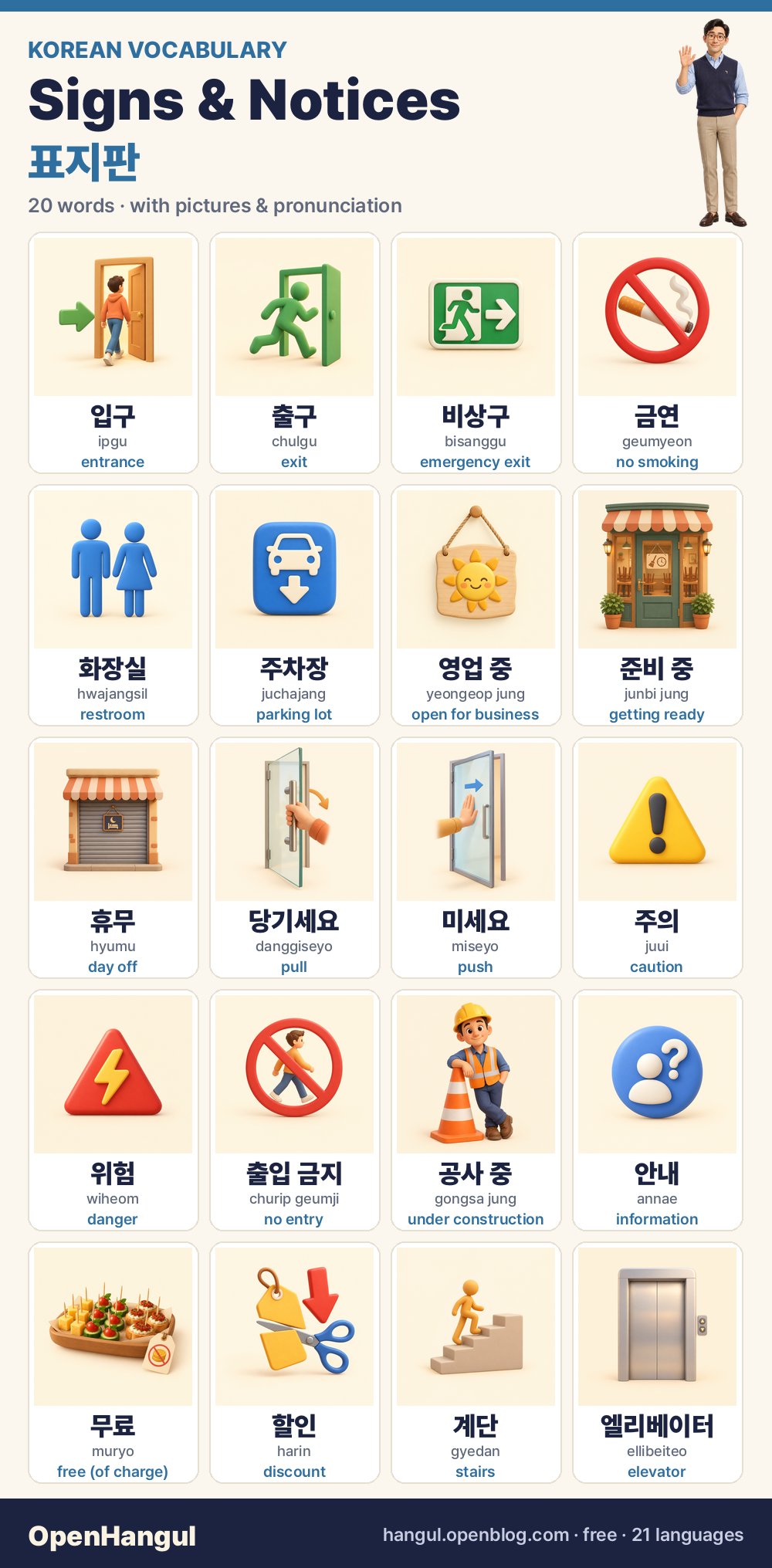
Word chart on one page
Save it and review whenever you have a spare moment. Feel free to share it with friends.
Save word chart imageAd