
Food, Table Manners and the Words of Jeong (정)
Learn the words and manners of the Korean table: 잘 먹겠습니다, 밥 먹었어요? as a greeting, refilling side dishes, eating with elders, and the warm feeling of 정.
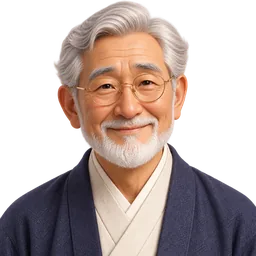 Professor Hangyeol · The history, culture and advanced expressions of Hangeul
What you will learn in this lesson
- Say the right words before and after a meal
- Understand why 밥 먹었어요? is a greeting
- Follow basic table manners with older people
- Understand 정 (jeong) and the culture of sharing food
Welcome, my friend. Sit down, sit down. Have you eaten? In Korea, that is how an old man like me says hello. Today let me tell you about our table, where much of Korean warmth lives.
Food is love
In Korea, food has always meant more than eating. For a long time, many families did not have enough. So sharing a meal became a way to show care, and asking whether someone had eaten was a way to ask whether they were well.
Even now, when food is plentiful, Koreans greet each other with words about rice. 밥 (cooked rice) also simply means "a meal." You will hear the saying 한국 사람은 밥심으로 산다: Koreans live on the strength they get from rice. 밥심 is 밥 + 힘 (strength), and people say it with a smile when they eat a hearty meal before hard work.
Before and after eating
- 잘 먹겠습니다. [잘 먹껟씀니다.] jal meokgetseumnida. Thank you for the food. (said before eating) Literally "I will eat well." Say it to the cook or the person who is paying.
- 잘 먹었습니다. [잘 머걷씀니다.] jal meogeotseumnida. Thank you, I enjoyed the meal. (said after eating) Literally "I ate well." A very important thank-you.
- 잘 먹을게요! [잘 머글께요!] jal meogeulgeyo! Thanks, I'll enjoy it! A friendly, less formal version before eating.
- 잘 먹었어요. 정말 맛있었어요. [잘 머거써요. 정말 마시써써요.] jal meogeosseoyo. jeongmal masisseosseoyo. Thanks for the meal. It was really delicious.
- 많이 드세요. [마니 드세요.] mani deuseyo. Please eat a lot. / Enjoy your meal. Said by the host or cook. 드시다 is the honorific of 먹다.
- 천천히 드세요. cheoncheonhi deuseyo. Please take your time eating.
Rice as a greeting
- 밥 먹었어요? [밤 머거써요?] bap meogeosseoyo? Did you eat? (= How are you?) A friendly greeting. You don't need to give a real answer about your lunch.
- 식사하셨어요? [식싸하셔써요?] siksahasyeosseoyo? Have you had your meal? (polite) More respectful. Good for older people and at work.
- 언제 밥 한번 먹어요. [언제 밥 한번 머거요.] eonje bap hanbeon meogeoyo. Let's have a meal sometime. Often a warm goodbye, like "Let's keep in touch," not always a real plan.
- 밥은 꼭 챙겨 먹어. [바븐 꼭 챙겨 머거.] babeun kkok chaenggyeo meogeo. Make sure you eat properly. Parents and grandparents say this out of love. Casual form, from an older person to a younger one.
When my granddaughter calls me, the first thing she asks is 할아버지, 진지 드셨어요? 진지 is a very respectful word for a meal, used for grandparents. It warms my heart every time.
Ad
Table manners with older people
| Do this | Why |
|---|---|
| Wait until the oldest person picks up the spoon first | It shows respect for elders |
| Say 잘 먹겠습니다 before eating | Thanks to the cook or host |
| Pour drinks for older people with two hands | Two hands show respect |
| Receive a drink from an older person with two hands | Hold the glass with both hands |
| Turn your head slightly away when you drink in front of a much older person | A traditional sign of politeness, still common at work dinners |
| Don't leave before the elders finish, if you can | Leaving early can look impolite |
| Don't stick chopsticks straight up in rice | It reminds people of memorial rites for the dead |
Families and friends of the same age are more relaxed, but these manners matter with elders and at work.
Side dishes and refills
In many Korean restaurants, small side dishes called 반찬 come free with the meal: kimchi, seasoned vegetables, and more. In most places you can ask for more of them at no extra cost. Some restaurants have a self-service corner instead.
Ask politely: 반찬 좀 더 주세요 or 김치 좀 더 주실 수 있어요? Don't waste food, though. Take only what you will finish.
Koreans also often share main dishes from the middle of the table. Use your own chopsticks to take a little at a time, or use the serving spoon if there is one.
Useful sentences at the table
- 반찬 좀 더 주세요. banchan jom deo juseyo. Could I have some more side dishes, please?
- 물은 셀프예요. mureun selpeuyeyo. Water is self-service. A sign you often see in restaurants.
- 제가 한 잔 따라 드릴게요. [제가 한 잔 따라 드릴께요.] jega han jan ttara deurilgeyo. Let me pour you a drink. Say it to an older person, and pour with two hands.
- 이것 좀 드셔 보세요. igeot jom deusyeo boseyo. Please try some of this. Offering food to someone older.
- 배불러요. baebulleoyo. I'm full.
- 더 먹어, 더 먹어! [더 머거, 더 머거!] deo meogeo, deo meogeo! Eat more, eat more! Grandparents' favorite words to grandchildren.
정: the warm glue between people
정 (情) is hard to translate. It is the warm feeling of attachment and care that grows between people over time: between neighbors, classmates, coworkers, even a shop owner and a regular customer. It is not exactly love or friendship. It is the feeling that we belong to each other a little.
Food is one of the clearest ways to show 정. A neighbor brings you some extra kimchi. A restaurant owner gives you an extra egg because you come often. A coworker shares snacks from their hometown. Koreans call this 정을 나누다, sharing 정.
You will hear 정이 많다 ("to have a lot of 정") for kind, generous people, and 정들다 for when you become attached to a person or place. When you leave a place you love, a Korean might say 그동안 정들었는데…: "I've grown so attached to you."
Words of 정
- 정이 많다 [정이 만타] jeongi manta to be warm-hearted and generous
- 정들다 jeongdeulda to become attached to someone or a place
- 정을 나누다 jeongeul nanuda to share warmth and kindness
- 밥심 [밥씸] bapsim the strength you get from eating a good meal
- 진지 jinji a meal (very respectful, for elders)
Dinner at a friend's grandmother's house
Check quiz
Q1. What do you say before you start eating a meal someone prepared for you?
Q2. A Korean coworker says 점심 먹었어요? when you meet. What is it mostly?
Q3. How should you pour a drink for an older person?
Q4. When can you start eating at a family dinner?
Q5. Which is closest to the meaning of 정?
Q6. How do you politely ask for more side dishes?
You have learned well. Next time you share a meal with Korean friends, say 잘 먹겠습니다 with a smile, and you will feel the 정 at that table. Now, go and eat something good. 밥심이 중요해요!
Key points
- 잘 먹겠습니다 before eating; 잘 먹었습니다 after eating
- 밥 먹었어요? / 식사하셨어요? are warm greetings
- Wait for elders to start; pour and receive drinks with two hands
- Free side dishes (반찬) can usually be refilled: 반찬 좀 더 주세요
- 정 is the warm bond Koreans show by sharing food
Recommended official free resources
- Korean Basic Dictionary (multilingual) — National Institute of Korean Language
- Everyone's Korean (모두의 한국어) — Ministry of Education
Ad