
Respect in Korean: Polite and Honorific Speech
Understand the two sides of Korean respect: polite endings for the listener and honorifics for the person you talk about.
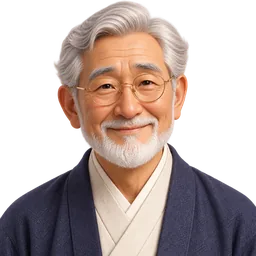 Professor Hangyeol · The history, culture and advanced expressions of Hangeul
What you will learn in this lesson
- Tell the difference between politeness (to the listener) and honorifics (about a person)
- Recognize -아요/어요, -습니다/ㅂ니다 and casual speech
- Use -(으)시- and a few honorific verbs and nouns
- Use humble words like 저, 저희 and 드리다
Welcome, my young friend. I am Professor Hangyeol. When I was a boy, my grandmother taught me how to greet elders before she taught me almost anything else. Today, let me share that same gift with you: the language of respect.
Respect lives in the grammar
In many languages, people show respect with tone of voice or with a few special words like "sir" or "madam". Korean does this too, but it also builds respect into the grammar of the sentence.
It may sound difficult, but there is a simple map. Korean respect has two separate directions:
1. Politeness toward the listener. Who am I speaking to? This decides the sentence ending: -아요/어요, -습니다, or casual speech.
2. Honorifics toward the subject. Who am I speaking about? If it is someone who deserves respect, such as a teacher, a grandparent or a customer, I add -(으)시- to the verb and may use special words.
The two directions can mix. You can speak politely to your friend while showing respect to the friend’s grandmother in the same sentence.
Three speech styles you will meet first
| Style | Example | When |
|---|---|---|
| Formal polite | 감사합니다. 학생입니다. | news, announcements, presentations, the military, greeting customers, first meetings in formal settings |
| Polite (everyday) | 고마워요. 학생이에요. | most daily conversation with people you don’t know well, colleagues, shop staff |
| Casual (반말) | 고마워. 학생이야. | close friends of the same age, younger family members, children |
As a learner, the -아요/어요 style is your safe home base. Use 반말 only when the other person suggests it.
The formal polite style: -습니다/ㅂ니다
You have already met this style in 감사합니다 and 안녕하십니까. It sounds crisp and official.
- Vowel stem + -ㅂ니다: 가다 → 갑니다, 하다 → 합니다. - Consonant stem + -습니다: 먹다 → 먹습니다, 있다 → 있습니다. - ㄹ stem: drop ㄹ + ㅂ니다: 살다 → 삽니다, 만들다 → 만듭니다. - Questions: -ㅂ니까/습니까? 가십니까? 있습니까?
Note the pronunciation: ㅂ before ㄴ becomes [ㅁ]. 갑니다 sounds like [감니다], and 감사합니다 sounds like [감사함니다].
You do not need to speak like this all day. But for a short self-introduction in a formal place, it is lovely: 처음 뵙겠습니다. 마리아입니다. 잘 부탁드립니다.
Long ago, young people bowed deeply and spoke very carefully to elders in the village. Today life is more relaxed, but the heart is the same: if you are unsure, choose the more polite form. Nobody is ever offended by too much respect.
Ad
honorific: shows respect to the subject of the sentence
- Polite present: vowel stem + -세요, consonant stem + -으세요: 가다 → 가세요, 읽다 → 읽으세요.
- Formal: -(으)십니다: 가십니다, 읽으십니다.
- Past: -(으)셨어요: 가셨어요, 읽으셨어요.
- ㄹ stem drops ㄹ: 살다 → 사세요, 알다 → 아세요.
- Never use -(으)시- about yourself. 저는 가요, but 선생님은 가세요.
- 선생님은 지금 사무실에 가세요. seonsaengnimeun jigeum samusire gaseyo.The teacher is going to the office now.
- 할아버지께서 신문을 읽으세요. [하라버지께서 신무늘 일그세요] harabeojikkeseo sinmuneul ilgeuseyo.Grandfather is reading the newspaper.
- 어머니는 서울에 사세요. eomeonineun seoure saseyo.My mother lives in Seoul.
- 사장님이 벌써 퇴근하셨어요. [사장니미 벌써 퇴근하셔써요] sajangnimi beolsseo toegeunhasyeosseoyo.The boss has already left work.
Special honorific verbs and nouns
| Normal | Honorific | Meaning |
|---|---|---|
| 있다 | 계시다 | to be (somewhere), to stay |
| 먹다 / 마시다 | 드시다 | to eat / to drink |
| 자다 | 주무시다 | to sleep |
| 말하다 | 말씀하시다 | to speak |
| 이름 | 성함 | name |
| 나이 | 연세 | age |
| 집 | 댁 | home, house |
| 밥 | 진지 | meal |
| 이/가 | 께서 | subject particle |
| 에게/한테 | 께 | to (a person) |
Use the honorific words when the person is older, of higher status, or a customer.
Lowering yourself: humble words
Korean also shows respect by making yourself a little lower. This is not about feeling small. It is a gentle way to lift the other person.
- 나 (I) → 저; 우리 (we) → 저희. - 주다 (to give) → 드리다 when you give to someone respected: 선생님께 선물을 드렸어요 (I gave a present to my teacher). - 묻다 (to ask) → 여쭙다/여쭤보다: 하나 여쭤봐도 될까요? (May I ask you something?) - 만나다 (to meet) → 뵙다: 처음 뵙겠습니다 (Nice to meet you, literally "I see you for the first time").
So in one sentence you might lift the other person with -(으)시- and lower yourself with 저 and 드리다. That is the beauty of the system.
Respectful sentences for daily life
- 성함이 어떻게 되세요? [성하미 어떠케 되세요] seonghami eotteoke doeseyo? May I ask your name? Very polite; used by staff and with elders.
- 연세가 어떻게 되세요? [연세가 어떠케 되세요] yeonsega eotteoke doeseyo? May I ask how old you are? For older people only.
- 할머니, 진지 드셨어요? [할머니, 진지 드셔써요] halmeoni, jinji deusyeosseoyo? Grandma, have you eaten?
- 사장님 댁이 어디세요? sajangnim daegi eodiseyo? Where is your home, sir? Said to a business owner or boss.
- 선생님께 말씀드릴게요. [선생님께 말씀드릴께요] seonsaengnimkke malsseumdeurilgeyo. I will tell the teacher. 말씀드리다 = humble "to tell"
- 처음 뵙겠습니다. [처음 뵙껟씀니다] cheoeum boepgetseumnida. Nice to meet you. (very polite)
- 저희 회사는 부산에 있습니다. [저히 회사는 부사네 읻씀니다] jeohui hoesaneun busane itseumnida. Our company is in Busan.
Meeting a friend’s grandfather
Who gets the honorific?
- 제가 갈게요. jega galgeyo. I’ll go. About yourself: never -(으)시-.
- 선생님이 가세요. seonsaengnimi gaseyo. The teacher is going. About a respected person: -(으)시-.
- 제 동생이 와요. je dongsaengi wayo. My younger sibling is coming. About a younger person: no honorific, but still the polite 요 ending to the listener.
Check quiz
Q1. Which style is the safest everyday choice for a learner?
Q2. "Grandmother is at home." Choose the respectful sentence.
Q3. Which sentence is WRONG?
Q4. What is the formal polite form of 먹다?
Q5. "I gave a gift to my teacher." Choose the humble verb.
Q6. How do you politely ask an older person’s name?
You have taken a very important step today. Respect in Korean is like a warm coat: at first it feels heavy, but soon it keeps you comfortable everywhere. Practice with 처음 뵙겠습니다, and every elder you meet will smile at you.
Key points
- Two directions: the ending shows politeness to the listener; -(으)시- shows respect to the subject.
- Styles: -습니다 (formal), -아요/어요 (everyday polite), 반말 (casual).
- Honorific words: 계시다, 드시다, 주무시다, 성함, 연세, 댁, 께서.
- Humble words: 저, 저희, 드리다, 뵙다.
- Never use -(으)시- about yourself.
Recommended official free resources
- Korean Language Teaching & Learning Center — National Institute of Korean Language
- Standard Korean Dictionary — National Institute of Korean Language
Ad