Minjun moves from Jeonju to Garam Villa in Seoul. On his first day he meets the movers, his landlady Grandma Youngja, and his neighbor Sua, learns the rules for trash, and calls his mom at night.
이렇게 공부해요
대화를 끝까지 들어요 (▶ 전체 듣기)
핵심 표현과 설명을 읽어요
문장을 하나씩 눌러 듣고 소리 내어 따라 말해요
한 사람 역할을 맡아 대화를 연습해요
스위치를 끄면 번역을 가리고 한국어만 볼 수 있어요.
상황 1
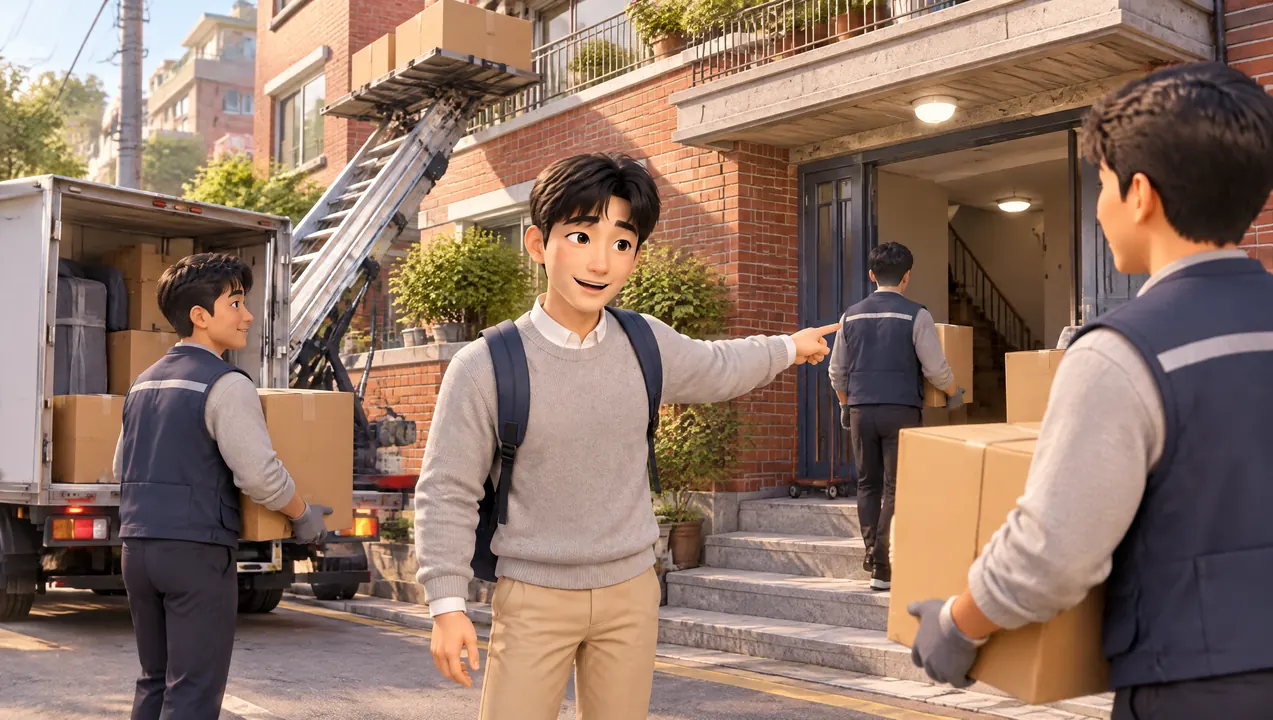
이삿짐 트럭이 왔어요 The Moving Truck Arrives
직원
민준
직원
민준
직원
민준
직원
민준
핵심 표현
조심해서 옮겨 주세요
창문 옆에 놓아 주세요
수고하셨습니다
선생님 설명 읽기
Let's look at three expressions. First, Minjun says 조심해서 옮겨 주세요. 조심해서 means carefully, and 옮겨 주세요 means please move it. When you want someone to do something, just add 주세요 to the action. Next, 창문 옆에 놓아 주세요. Please put it next to the window. Put the place first, then 에, then 놓아 주세요. And when the movers finish, Minjun says 수고하셨습니다. There's no perfect English word for this. It's a warm thank you for someone's hard work. Koreans say it to delivery workers, staff, and coworkers all the time.
상황 2
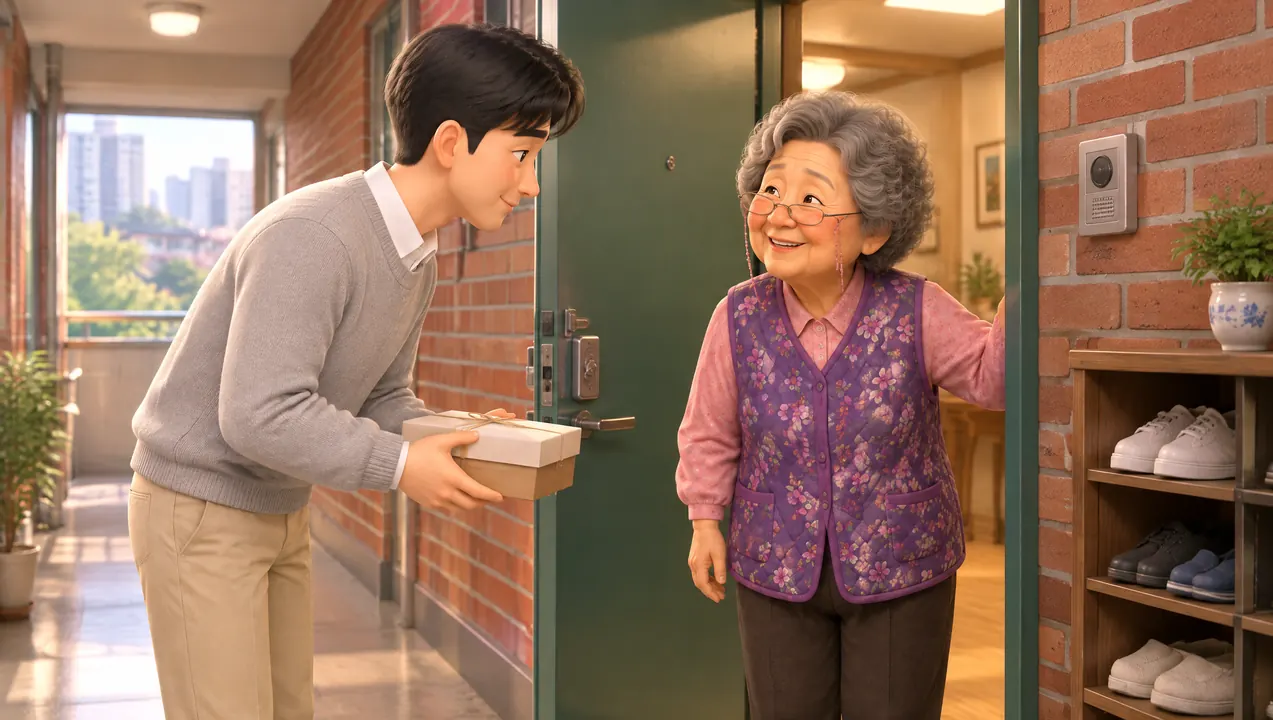
집주인 할머니 Meeting the Landlady
영자 할머니
민준
영자 할머니
민준
영자 할머니
민준
영자 할머니
민준
핵심 표현
앞으로 잘 부탁드립니다
밥은 먹었어요?
짐 정리하느라고요
선생님 설명 읽기
Grandma Youngja speaks a little casually, because she's much older. That's very natural in Korea. Minjun answers politely with 앞으로 잘 부탁드립니다. It means, please take good care of me from now on. Use it whenever something new begins. Did you notice 밥은 먹었고? Have you eaten? In Korea this is often a warm greeting that means, I care about you. Minjun says 아직 못 먹었어요. 짐 정리하느라고요. Not yet, I've been busy unpacking. Verb plus 느라고 tells the reason you couldn't do something else.
광고
상황 3
옆집 사람 The Neighbor Next Door
수아
민준
수아
민준
수아
민준
수아
민준
핵심 표현
시끄러우셨죠? 죄송해요
놀러 오세요
언제든지 물어보세요
선생님 설명 읽기
Minjun says 시끄러우셨죠? 죄송해요. It must have been noisy, sorry. Apologizing for moving noise is good manners in Korean apartments and villas. Sua invites him: 놀러 오세요. Literally, come to play, but it just means, come visit. And 언제든지 물어보세요 means, ask me anytime. 언제든지 is anytime. Last, 든든하네요. 든든하다 is the safe, reassuring feeling of having someone on your side.
상황 4
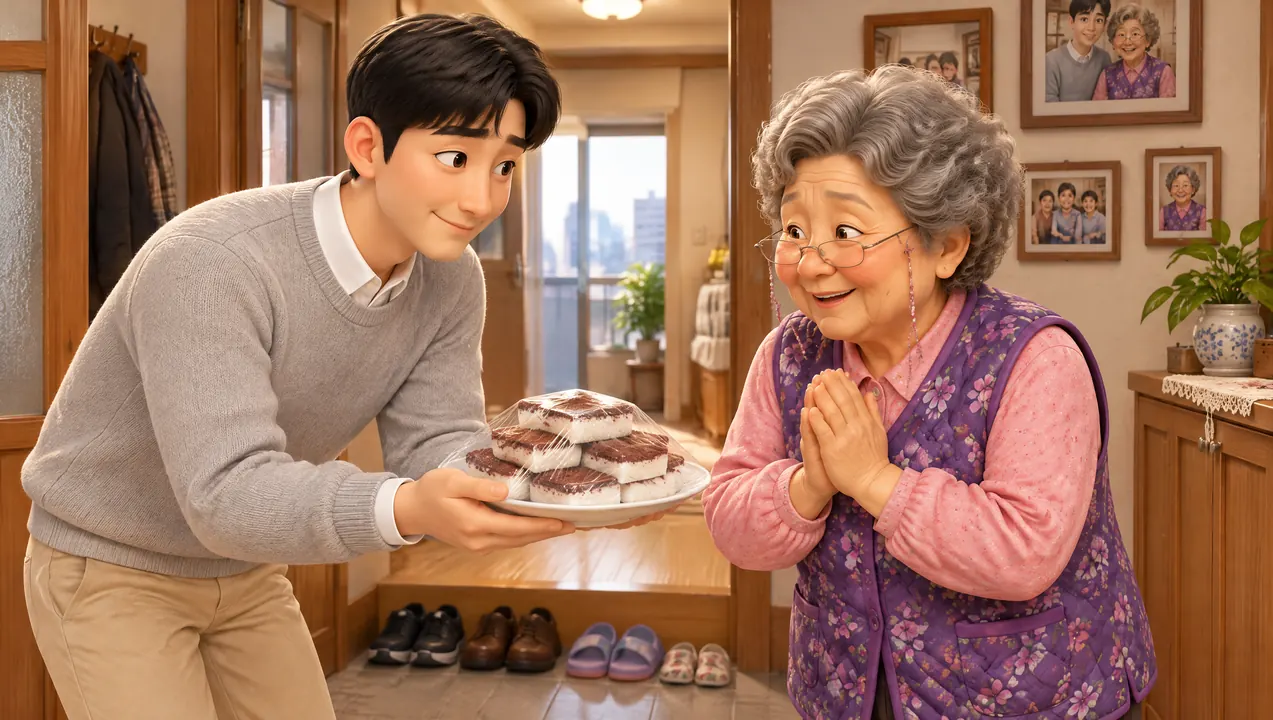
이사 떡 돌리기 Sharing Moving-Day Rice Cakes
민준
영자 할머니
민준
영자 할머니
민준
영자 할머니
민준
영자 할머니
핵심 표현
계세요?
드셔 보세요
별거 아니에요
선생님 설명 읽기
In Korea, when you move, you can share rice cakes, 이사 떡, with your neighbors. It's an old custom that says, hello, let's get along. Minjun knocks and says 계세요? Is anyone home? 계시다 is the respectful word for 있다, to be. Then 드셔 보세요. Please try it. With older people, use 드시다 instead of 먹다. When Grandma thanks him, he answers 별거 아니에요. It's nothing special. Koreans often answer thanks in a humble way like this. Now you be Minjun. When his line appears, say it out loud!
상황 5
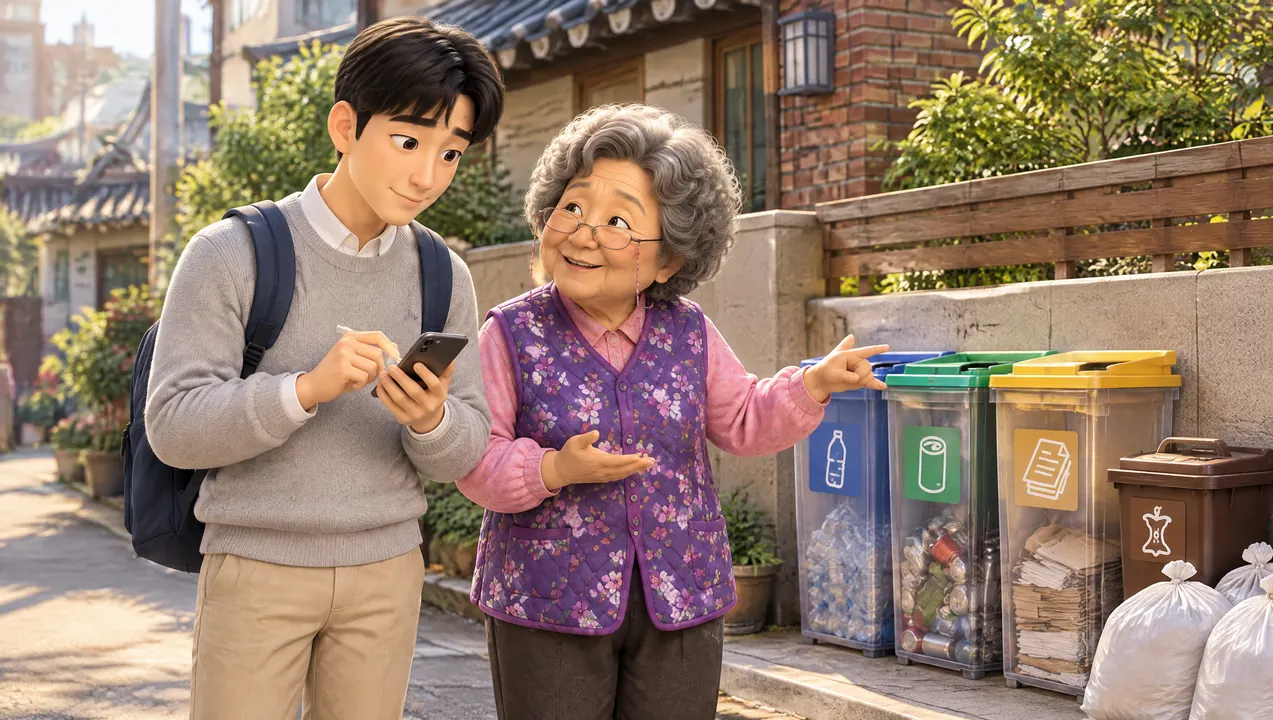
쓰레기 버리는 날 Trash Day Rules
영자 할머니
민준
영자 할머니
민준
영자 할머니
영자 할머니
민준
영자 할머니
핵심 표현
종량제 봉투에 넣어야 돼요
따로 모아서
잊어버리지 않게 적어 둘게요
선생님 설명 읽기
Korea has strict trash rules, and every neighborhood is a little different. Regular trash goes in special paid bags called 종량제 봉투. Grandma says 넣어야 돼. You have to put it in. Verb plus 아 or 어야 돼요 means have to. Plastic and cans are collected separately: 따로 모아서, collect them separately. And food waste, 음식물 쓰레기, has its own bin. Minjun answers 잊어버리지 않게 적어 둘게요. I'll write it down so I don't forget. Verb plus 지 않게 means so that it doesn't happen.
광고
상황 6
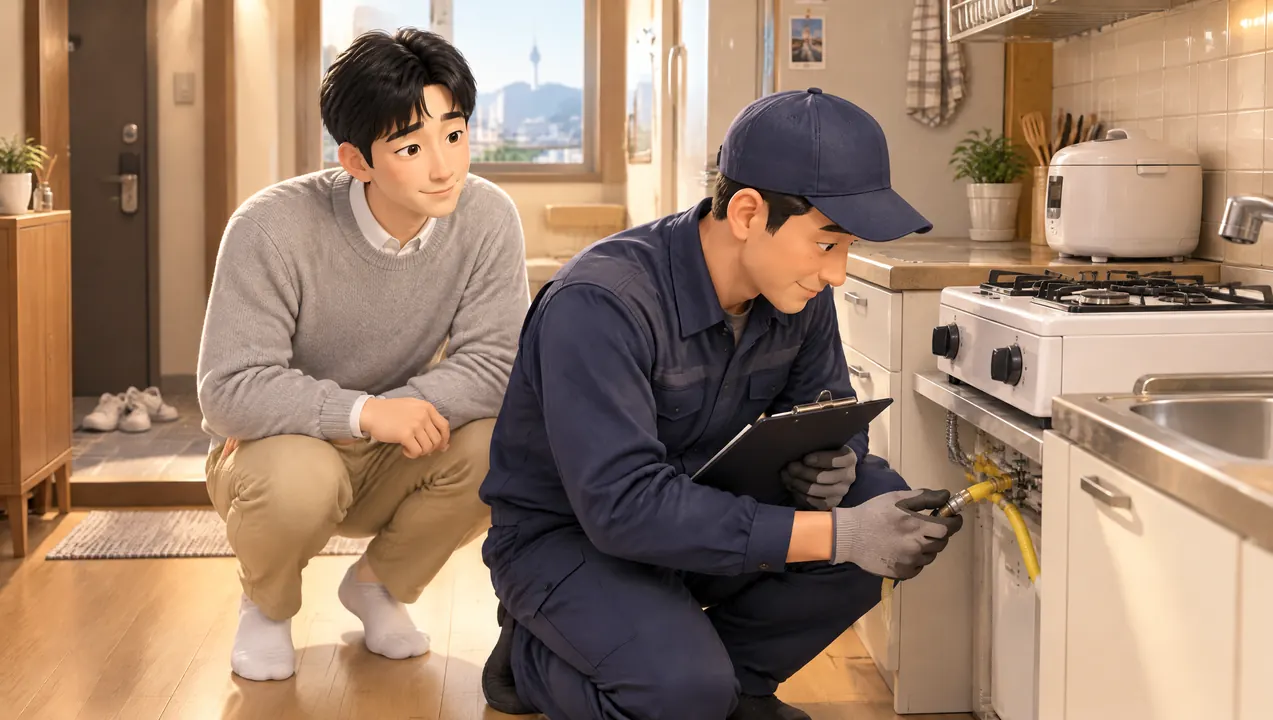
가스 연결 The Gas Technician Visits
직원
민준
직원
민준
직원
직원
민준
직원
민준
핵심 표현
신발은 여기 벗으시면 돼요
시간이 얼마나 걸려요?
서명 부탁드립니다
선생님 설명 읽기
In Korean homes, you take your shoes off at the entrance, even workers. So Minjun says 신발은 여기 벗으시면 돼요. You can take off your shoes here. Verb plus 으시면 돼요 is a soft, polite way to say what someone can do. To ask about time, say 시간이 얼마나 걸려요? How long does it take? And the technician says 서명 부탁드립니다. Please sign. Noun plus 부탁드립니다 is a very polite request you'll hear at banks, offices, and deliveries.
상황 7
편의점에서 At the Convenience Store
민준
직원
민준
직원
민준
직원
민준
직원
핵심 표현
작은 걸로 주세요
다섯 장이요
카드 돼요?
선생님 설명 읽기
Minjun goes to buy trash bags. When you choose a size or type, say 작은 걸로 주세요, a small one, please, or 큰 걸로 주세요, a big one, please. Korean uses counting words. For flat things like bags, tickets, and paper, use 장. 다섯 장이요. Five, please. And to ask if you can pay by card, just say 카드 돼요? 돼요 asks, is it possible? The clerk also asks 봉투 필요하세요? Do you need a bag? In Korea, shopping bags usually cost a little extra.
상황 8
첫날 밤 전화 Calling Mom on the First Night
엄마
민준
엄마
민준
엄마
민준
엄마
민준
핵심 표현
걱정하지 마
피곤할 텐데
잘 자
선생님 설명 읽기
With family, Koreans usually speak casually, 반말. Listen: 걱정하지 마, don't worry. With someone you don't know well, add 세요: 걱정하지 마세요. Mom says 피곤할 텐데 일찍 자. You must be tired, so go to bed early. Verb plus 을 텐데 is a guess about someone's situation, often followed by advice. And 잘 자 means good night to friends and family. To grandparents or your boss, say 안녕히 주무세요. Now, it's your turn to be Minjun one more time.