

What you will learn in this lesson
- Know the 24 basic letters used today and the 4 letters that disappeared
- Understand who looks after Korean spelling and standard language
- Explain what Hangul Day (한글날) is and how Koreans celebrate it
- See how Hangul's design works well on keyboards and phones
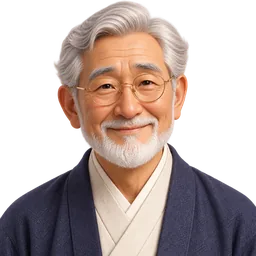
Welcome to our last story together in this level, my friend. We started more than five hundred years ago. Today, we come home to the present, to the Hangul on your phone and on the street signs of Seoul.
From 28 letters to 24
King Sejong created 28 letters: 17 consonants and 11 vowels. Over the centuries, the sounds of Korean slowly changed. Some sounds disappeared, and the letters for them were no longer needed.
Today, Korean uses 24 basic letters: 14 consonants and 10 vowels. Four of the original letters are no longer used in standard Korean: ㆍ, ㅿ, ㆁ and ㆆ.
The 24 basic letters can be combined to make more. Double consonants such as ㄲ and ㅆ, and combined vowels such as ㅐ, ㅘ and ㅢ, are all built from the basic ones. So when you count everything a learner needs, there are 19 consonants and 21 vowels. But they all come from just 24 basic shapes.
The letters, then and now
| Original (1446) | Today | |
|---|---|---|
| Consonants | 17 | 14 |
| Vowels | 11 | 10 |
| Total basic letters | 28 | 24 |
| Letters no longer used | — | ㆍ ㅿ ㆁ ㆆ |
Today's 14 basic consonants: ㄱ ㄴ ㄷ ㄹ ㅁ ㅂ ㅅ ㅇ ㅈ ㅊ ㅋ ㅌ ㅍ ㅎ. Today's 10 basic vowels: ㅏ ㅑ ㅓ ㅕ ㅗ ㅛ ㅜ ㅠ ㅡ ㅣ.
Words for this lesson
- 한글날 [한글랄] hangeullal Hangul Day (October 9)
- 공휴일 gonghyuil public holiday (a day off)
- 국경일 [국꼉일] gukgyeongil national holiday (a day of national celebration)
- 맞춤법 [맞춤뻡] matchumbeop spelling rules
- 표준어 pyojuneo standard language
- 자판 japan keyboard (layout)
- 글꼴 geulkkol font, typeface
Who looks after Korean spelling?
In the last lesson, you learned that unified spelling rules were first published in 1933. Since then, the rules have been revised several times. The current 한글 맞춤법, Korean spelling rules, were officially announced in 1988, with some updates later.
In South Korea, the National Institute of Korean Language (국립국어원) studies the language and looks after the standard rules for spelling, pronunciation and loanwords. It also publishes free dictionaries online. As a learner, you can use them too.
The rules define 표준어, standard Korean. Standard Korean is based on the modern speech of Seoul. Of course, people in other regions speak their own dialects, and those are a precious part of Korean culture. But in schools, news and official writing, the standard language and standard spelling are used.
Ad
One language, two spellings
Korean is also used in North Korea, where the writing system is called 조선글. The letters are the same, but some spelling rules are different. For example, at the start of a word, South Korea often changes ㄹ and ㄴ sounds, while North Korea keeps them. The word for 'labor' is written 노동 in the South and 로동 in the North. The letters are shared, and people from both sides can read each other's writing.
Do not worry about spelling rules too much at the beginning. Even Koreans check the dictionary sometimes! I am 65 years old, and I still look up 띄어쓰기 now and then.
Hangul Day
Every year on October 9, Koreans celebrate 한글날, Hangul Day. It remembers the day King Sejong announced Hunminjeongeum to the people in 1446.
The first celebration was held in 1926 by Korean language scholars. At first it was called 가갸날, after the first syllables children learned when practicing Hangul: 가, 갸, 거, 겨. A few years later, the name became 한글날. After the Haerye edition was discovered in 1940, the date written in it was used to fix the celebration on October 9.
A holiday again
For many years, Hangul Day was a public holiday, a day off from school and work. In 1991, it was removed from the list of days off, although it was still celebrated. In 2006, it became a 국경일, one of Korea's official national holidays. Then, from 2013, it became a day off again.
On Hangul Day, you can see special events across Korea: writing contests, calligraphy shows, exhibitions and talks about the Korean language. The National Hangeul Museum in Seoul, which opened in 2014, also holds programs throughout the year.
Talking about Hangul Day
- 10월 9일은 한글날이에요. [시월 구이른 한글라리에요] 10wol 9ireun hangeullarieyo. October 9 is Hangul Day. October is read as 시월, not 십월.
- 한글날은 공휴일이에요. [한글라른 공휴이리에요] hangeullareun gonghyuirieyo. Hangul Day is a public holiday.
- 한글날에 박물관에 갔어요. [한글라레 방물과네 가써요] hangeullare bangmulgwane gasseoyo. I went to a museum on Hangul Day.
- 맞춤법을 사전에서 찾아봐요. [맞춤뻐블 사전에서 차자봐요] matchumbeobeul sajeoneseo chajabwayo. I look up the spelling in a dictionary.
Hangul in the digital age
King Sejong could not imagine computers, but his design works beautifully with them. Because Hangul has a small number of letters, it fits easily on a keyboard.
The standard Korean 자판, keyboard layout, is called 두벌식, which means 'two sets'. The consonants are on the left side of the keyboard, and the vowels are on the right. You type the letters one by one, and the computer automatically builds them into syllable blocks. For example, if you type ㅎ, ㅏ, ㄴ, the screen shows 한.
On phones, Koreans use several keyboards. One popular style has just three vowel keys, ㆍ, ㅡ and ㅣ, based directly on heaven, earth and human. Other people prefer a layout like the computer keyboard. Either way, Hangul is fast to type.
How letters become blocks when you type
- ㅎ + ㅏ + ㄴ → 한 ㅎ + ㅏ + ㄴ → han Three letters typed one by one become one syllable block.
- ㄱ + ㅡ + ㄹ → 글 ㄱ + ㅡ + ㄹ → geul Consonant, vowel, final consonant: one block.
- 한 + 글 → 한글 han + geul → hangeul Two blocks make the word Hangul.
- ㅅ + ㅏ + ㄹ + ㅏ + ㅁ → 사람 ㅅ + ㅏ + ㄹ + ㅏ + ㅁ → saram The computer decides where one block ends and the next begins. After ㄹ comes a vowel, so ㄹ moves to start the second block.
11,172 possible syllables
In computer systems, modern Hangul syllable blocks are included as ready-made characters. Their number is 11,172. Where does this number come from? There are 19 possible first consonants, 21 vowels, and 28 options for the final position (27 final consonants, or no final consonant at all). 19 × 21 × 28 = 11,172.
Not all of these blocks are used in real words, but every one of them can be written and read. This shows how systematic the design of Hangul is: a small set of rules creates a huge number of possible syllables.
Hangul around the world
Today, people all over the world are learning Korean. Some start because they love Korean music, dramas or food. Others study for work, school or family. The Korean government supports Korean language education abroad through the King Sejong Institute (세종학당), named, of course, after the king who started it all.
And here you are, one of those learners. More than 500 years after King Sejong wished that everyone could learn his letters easily, his wish has crossed every ocean.
Now you know the whole story, from the first letter to the last keyboard. Next, my dear colleague Hana will teach you to read and write each letter. I think you will find them easier than you expect.
Check quiz
Q1. How many basic letters does Korean use today?
Q2. Which group contains the four letters no longer used?
Q3. When is Hangul Day?
Q4. What was Hangul Day first called in 1926?
Q5. On the standard Korean computer keyboard (두벌식), where are the vowels?
Q6. If you type ㅎ, ㅏ, ㄴ, what appears on the screen?
Q7. Which organization in South Korea looks after the standard spelling rules?
Thank you for listening to an old man's stories, my friend. You have been a wonderful student. Every time you write 한글, remember the king who made it for you. Good luck, and come visit me again anytime.
Key points
- Korean uses 24 basic letters today (14 consonants, 10 vowels); ㆍ ㅿ ㆁ ㆆ are no longer used.
- The National Institute of Korean Language looks after standard spelling (맞춤법) and standard language (표준어).
- Hangul Day (한글날) is October 9; it began as 가갸날 in 1926 and has been a day off again since 2013.
- The 두벌식 keyboard puts consonants on the left and vowels on the right; typed letters become syllable blocks automatically.
- There are 11,172 possible modern Hangul syllable blocks (19 × 21 × 28).
Recommended official free resources
- Korean Spelling & Standard Pronunciation rules — National Institute of Korean Language
- National Hangeul Museum — National Hangeul Museum
- Nuri-Sejong Hakdang (free e-textbooks) — King Sejong Institute Foundation
Ad