주민센터와 은행 Errands for Foreigners: Community Center and Bank
Linh, a new neighbor from Vietnam, moved into Garam Villa unit 301. Minjun goes with her on her first errands: reporting her new address at the community center, opening a bank account, getting a phone, receiving a parcel, and learning about the maintenance fee from Grandma Youngja.
How to study
Listen to the whole conversation (▶ Play all)
Read the key expressions and explanations
Tap each sentence to hear it, then say it out loud
Take on one role and practice the dialogue
Turn the switch off to hide the translation and see only Korean.
Scene 1
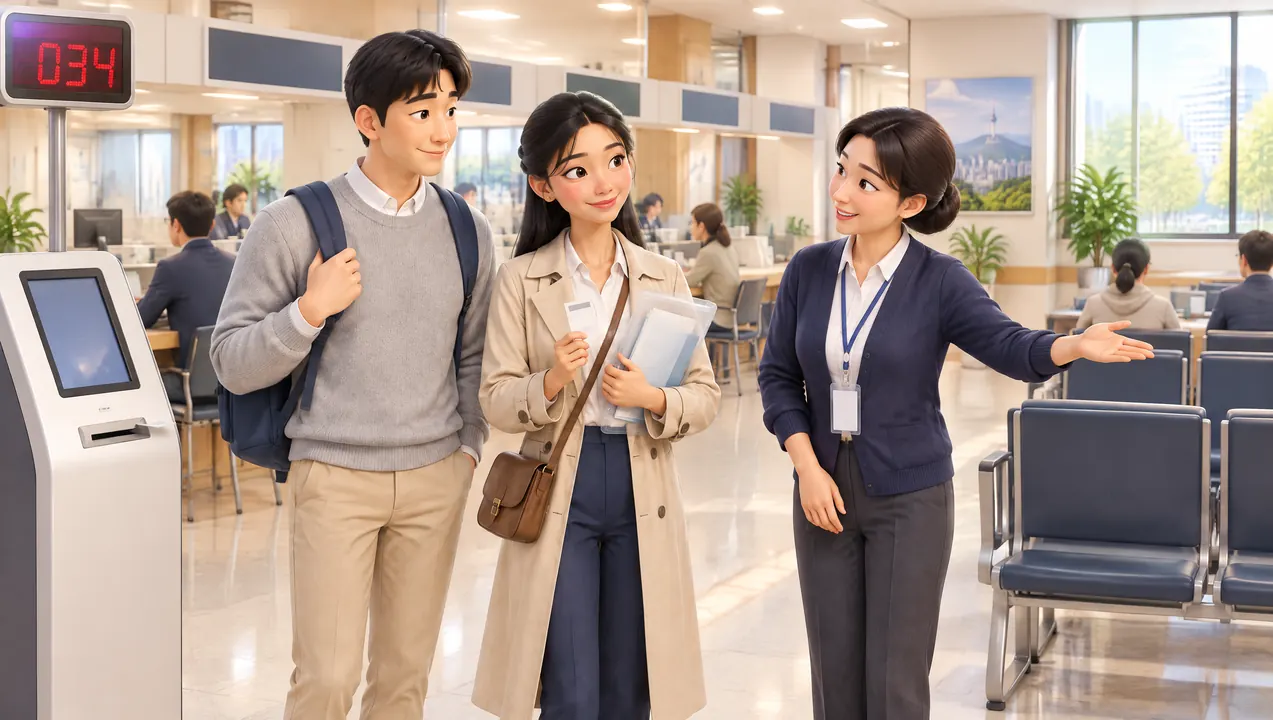
번호표를 뽑아요 Take a Number
린
직원
린
민준
린
직원
린
Key expressions
하러 왔는데요
번호표 먼저 뽑아 주세요
앉아서 기다리세요
Read the teacher's explanation
When you arrive somewhere, say what you came for. Linh says 체류지 변경신고 하러 왔는데요. I came to report my change of address. Verb plus 러 왔어요 means, I came to do it. If you are a foreign resident and you move, you must report your new address within 14 days. You can do it at the community center near your new home. Many offices use queue tickets, so you will often hear 번호표 먼저 뽑아 주세요. Please take a number first. And 앉아서 기다리세요. Please have a seat and wait.
Scene 2
외국인등록증 있으세요? Do You Have Your Residence Card?
직원
린
직원
린
직원
직원
린
직원
Key expressions
외국인등록증 있으세요?
등록증만 있으면 돼요
이렇게 쓰면 되나요?
Read the teacher's explanation
In Korea, your most important card is the 외국인등록증, the residence card. Staff will ask 외국인등록증 있으세요? Do you have your residence card? 있으세요 is a polite way to ask if someone has something. Good news: 등록증만 있으면 돼요. You only need the card. 만 means only. When you are not sure, ask 이렇게 쓰면 되나요? Is it okay if I write it like this? After the report, your new address goes on the back of the card. Now it's your turn. You are Linh.
Ad
Scene 3
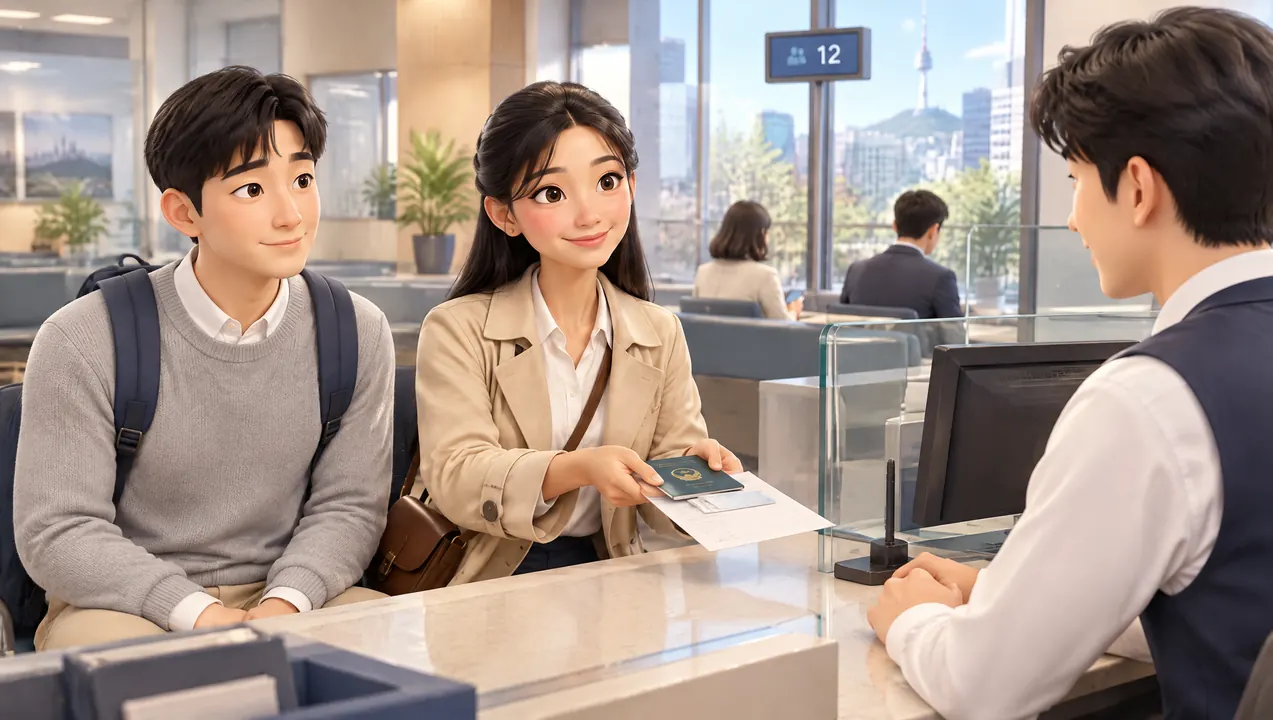
통장을 만들어요 Opening a Bank Account
직원
린
직원
린
직원
린
민준
Key expressions
만들고 싶은데요
가져오셨어요?
하래요
Read the teacher's explanation
To open an account, say 통장을 하나 만들고 싶은데요. I'd like to open an account. 고 싶다 means want to. As a foreigner, bring your residence card, your passport, and a paper from work. The teller asks 외국인등록증하고 여권 가져오셨어요? Did you bring your residence card and passport? 가져오다 means to bring. Linh says 회사에서 이 은행으로 하래요. My company told me to use this bank. 래요 means, someone told me to do it.
Scene 4
이체 한도가 있어요 Debit Card and Transfer Limits
직원
린
직원
직원
린
직원
린
직원
Key expressions
같이 만들어 드릴까요?
어떻게 올릴 수 있어요?
해외 송금도 돼요?
Read the teacher's explanation
Staff offer help with 드릴까요. 체크카드도 같이 만들어 드릴까요? Shall I make a debit card for you, too? Many new accounts in Korea start with a daily transfer limit, 이체 한도. To ask how to change something, use 수 있어요. 한도는 어떻게 올릴 수 있어요? How can I raise the limit? And if you send money home, ask 해외 송금도 돼요? Can I send money abroad, too? Now you be Linh.
Scene 5
휴대폰을 개통해요 Getting a Phone Plan
직원
린
직원
린
직원
린
민준
린
Key expressions
개통할 수 있어요?
많이 쓰시는 편이에요?
나을 거예요
Read the teacher's explanation
With a residence card, you can get a phone plan in your own name. Linh asks 외국인등록증으로 개통할 수 있어요? Can I open a phone plan with my residence card? 개통 means opening a new line. The clerk asks 데이터를 많이 쓰시는 편이에요? Do you tend to use a lot of data? 는 편이에요 means you tend to. Linh calls home a lot, so Minjun says 데이터 무제한이 나을 거예요. Unlimited data would be better. 을 거예요 is a guess.
Scene 6
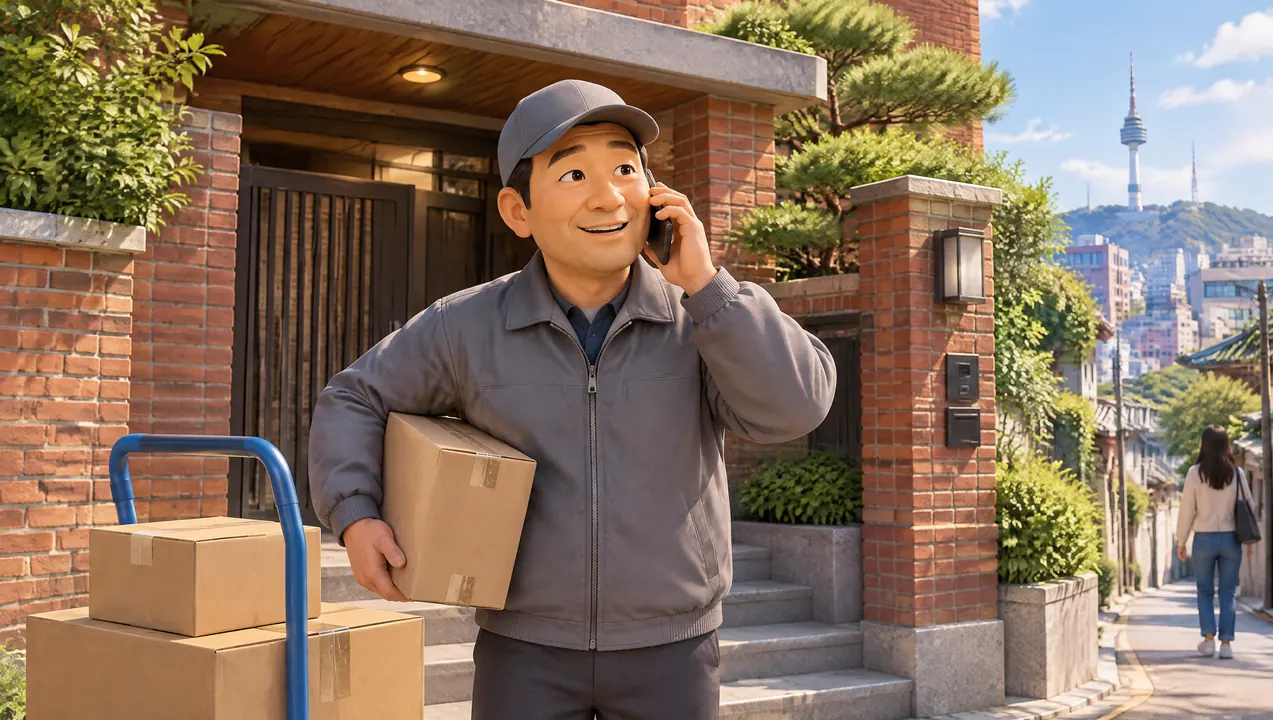
택배 왔어요 A Parcel Arrives
직원
린
직원
린
직원
린
직원
린
Key expressions
문 앞에 두고 갈까요?
천천히 말씀해 주시겠어요?
수고하세요
Read the teacher's explanation
Delivery drivers often ask 문 앞에 두고 갈까요? Shall I leave it at the door? 두고 가다 means to put it down and go. In Korea, parcels are usually left at the door. Phone calls can be fast, so here is the most useful sentence for learners: 천천히 말씀해 주시겠어요? Could you speak slowly, please? 주시겠어요 is a very polite request. And to someone who is working, say 수고하세요. Your turn, you are Linh.
Scene 7
관리비가 얼마예요? How Much Is the Maintenance Fee?
린
영자 할머니
린
영자 할머니
린
영자 할머니
린
Key expressions
매달 말일까지
포함이에요?
잊지 않고 꼭 낼게요
Read the teacher's explanation
In Korean villas and apartments, you pay a monthly maintenance fee, 관리비. Grandma says 매달 말일까지 내. Pay by the last day of every month. 매달 is every month, 말일 is the last day, and 까지 means by. Grandma speaks casually to young people, but Linh answers politely. To check what you pay for, ask 포함이에요? Is it included? And to promise, say 잊지 않고 꼭 낼게요. I won't forget, I'll be sure to pay.
Scene 8
할머니의 잔소리 Grandma's Advice
영자 할머니
린
영자 할머니
린
나래
린
민준
린
Key expressions
입에 맞아?
안 주셔도 되는데요
마음이 놓여요
Read the teacher's explanation
Grandma asks 한국 음식은 입에 맞아? Do you like Korean food? Literally, does it fit your mouth? Then she gives Linh side dishes, and Linh says 안 주셔도 되는데요. You don't have to give me this. In Korea, it's polite to refuse a gift once. But Narae says, just take them! So Linh says thank you and accepts. At the end, Linh says 마음이 놓여요. I feel relieved. One last time, you be Linh.